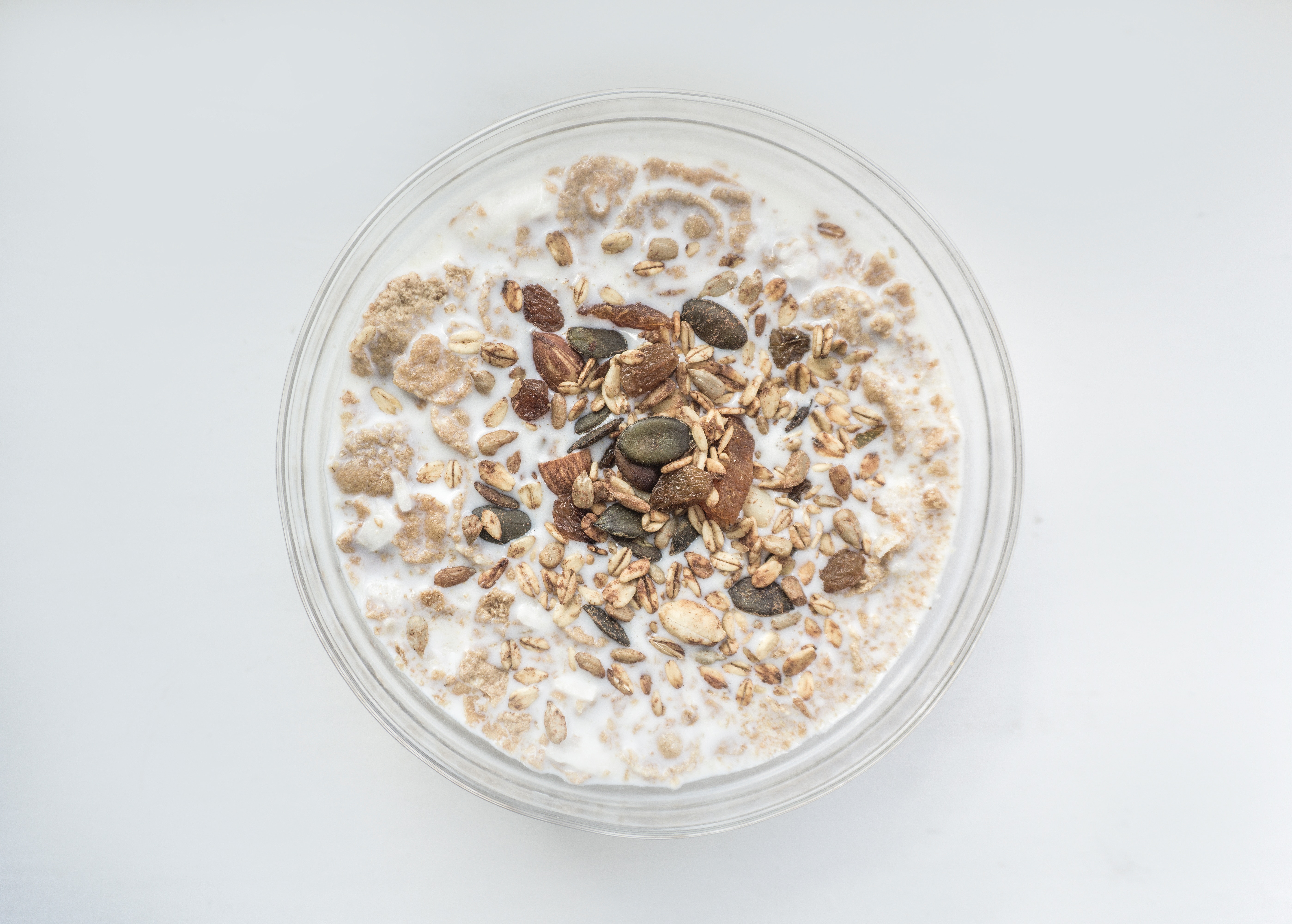
Oats are whole grains from Avena sativa and are packed with nutrients. For the purpose of human consumption, oat grains are milled, steamed, heated and then cooled in a kiln in order to make it flavourful. Then, they are rolled cut or ground to produce flakes, oatmeal or flour.
Here are 5 reasons why you need to start including oats as a part of your regular diet:
- Nutritional Value
100 grams of oats can make up for a major part of the nutrients you need for the day. It gives you 26% of your daily iron requirement, 5% of Vitamin B6, 44% of magnesium and 5% of calcium. Being among the most nutrient-dense foods, inclusion of oats in your diet can have amazing effects on your body and your overall health.
- Heart Health
In 1997, FDA approved the claim that oatmeal and other food products made from whole oats (such as oat bran and oat flour) were good for heart health due to its soluble fibres that have the ability to lower bad(LDL) cholesterol.
Soluble fibre can reduce the absorption of cholesterol into your bloodstream. Five to 10 grams or more of soluble fibre a day decreases your LDL cholesterol and reduces the risk of heart disease. A single serving of breakfast cereal with oatmeal or oat bran provides 3 to 4 grams of fibre. Add fruits like bananas or berries for additional fibre.
- Blood Sugar Control
Studies have revealed that the consumption of oats can have beneficial effects on glucose and lipid profiles in persons with type 2 diabetes. These might provide more benefits and a recommendation of 3 g or more per day of β-glucan (soluble fibre of oats) might be beneficial.
- Blood Pressure Control
According to an article published in the American Journal of Clinical Nutrition, a diet including plenty of whole grains (such as oats or wholemeal bread) is just as effective as taking anti-hypertension medication in lowering blood pressure. Three portions of oats, per day, is proven to significantly reduce the risk of cardiovascular diseases in middle-aged people through blood pressure-lowering mechanisms.
Avenanthramides found in oats may also help lower blood pressure levels by increasing the production of nitric oxide, a gas molecule that dilates blood vessels and leads to improved blood flow.

- Weight loss, skincare and other benefits
Oats, being rich in fibre, prevents binge-eating and can be helpful for persons with eating disorders. Because it has a tendency to make and those who wish to lose weight.
Colloidal oatmeal has also been approved as a skin-protective substance by FDA to be used as a cleanser (due to its saponins) and moisturiser.
Some studies also indicate that oat bran (the fibre-rich outer layer of the grain) may help relieve constipation in older people.
NOTE: Oats do not contain gluten. However, in rare cases, when they are grown in the same fields as wheat or barley, there is a slight chance that the oats may be contaminated with gluten. Persons with gluten intolerance or celiac disease are advised to take caution.
References:
- https://www.nutritionvalue.org/Oats_nutritional_value.html
- https://www.webmd.com/cholesterol-management/news/20080111/heartier-benefits-seen-from-oatmeal
- https://www.mayoclinic.org/diseases-conditions/high-blood-cholesterol/in-depth/cholesterol/art-20045192
- https://www.ncbi.nlm.nih.gov/pmc/articles/PMC4690088/
- https://academic.oup.com/ajcn/article/92/4/733/4597497
- https://www.researchgate.net/publication/6434542_Colloidal_Oatmeal_History_Chemistry_and_Clinical_Properties
- https://www.ncbi.nlm.nih.gov/pubmed/20191257